

Why are pistachios everywhere all of a sudden????
These green nuts are everywhere and I set out to figure out why

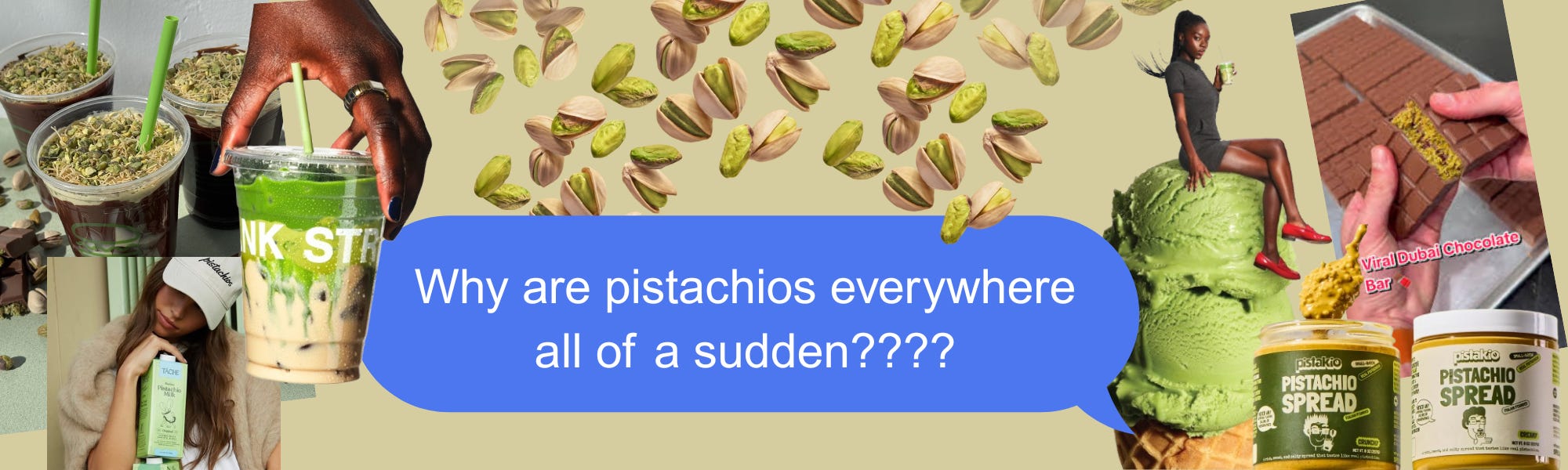
If you’re seeing pistachio matchas on your feed, “Dubai chocolate” on every menu sign, and green crumble on salads, same. I’m allergic to cashews and pistachios, which means I read menus like a lawyer. Spot-the-nut is a survival skill. So when pistachios started popping up in places they never used to — coffee bars, gas stations, pizza shops — it felt like more than hypervigilance.
It’s the same phenomenon when you get a new car and you feel like you’re seeing that make and model everywhere. Only here, the takeover is real.
Search interest has surged, menus have caught up, and supply has been quietly building for years. California’s pistachio acreage has nearly quintupled over two decades and overtook walnuts in 2021 to become the state’s No. 2 tree-nut acreage after almonds.
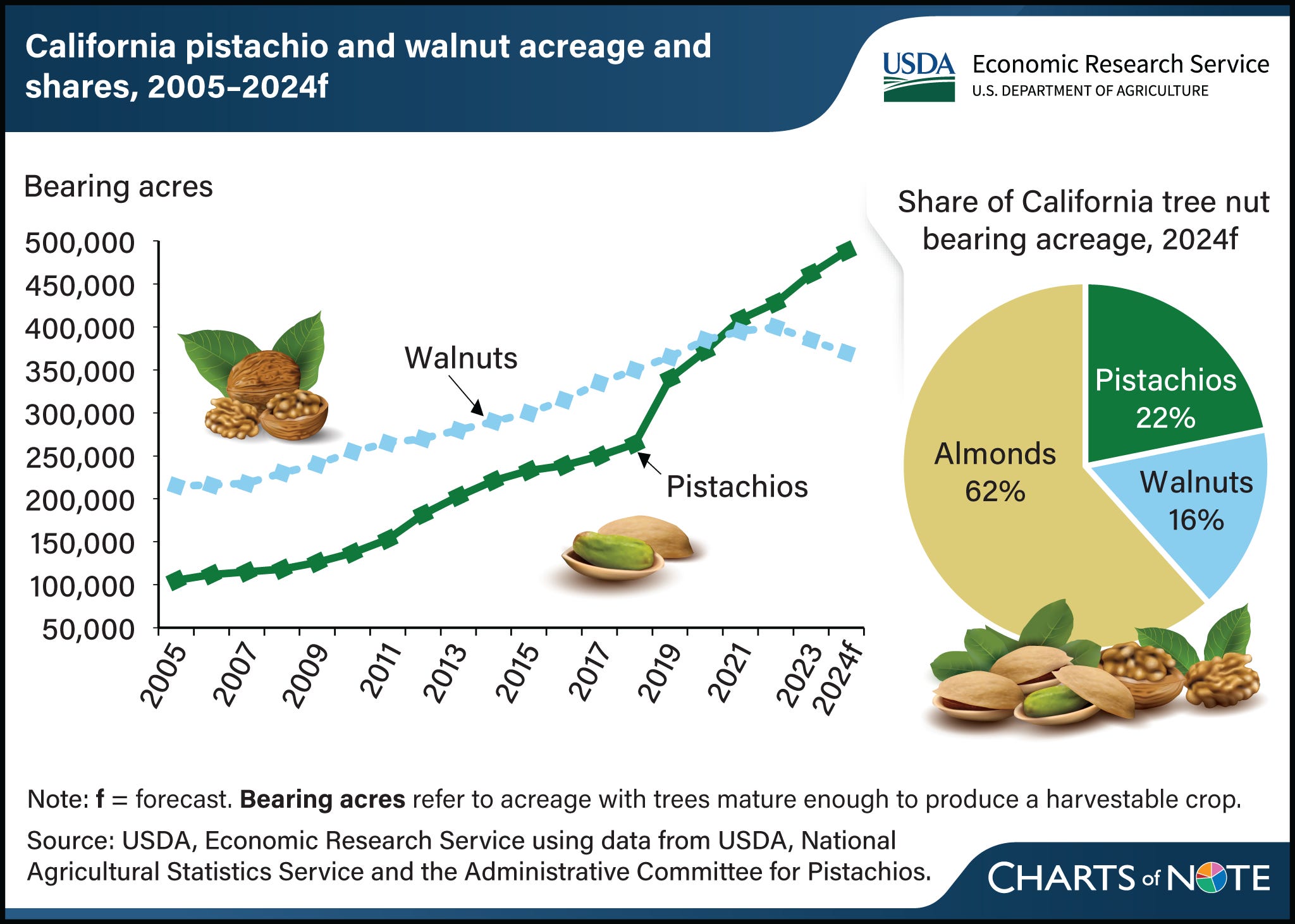
Pistachios didn’t start here. They’re native to West and Central Asia. The modern U.S. story begins with California’s first commercial crop in 1976, and today California produces about 99% of U.S. pistachios. Trees start giving a small crop around year 5–6 and don’t hit full stride until roughly a decade in, which means the planting boom of the 2000s–2010s matured right as pistachios were having their cultural moment.
So why did the category really break out?
Despite pistachio growth feeling like a personal affront, the acceleration is actually fairly straight-forward. It follows the standard physical and mental availability model.
Physical availability made pistachios easy to buy anywhere: grab-and-go packs at the airport, resealable bags, $2 extra for pistachio milk, pistachio ice cream and don’t forget the pistachio topping. The excess supply of the crop made it easy to say yes to distribution. Mental availability made them easy to think of: silly but memorable campaigns, every video on TikTok, Superbowl ads, bags you can spot from across the aisle. When both rise together, penetration follows. That’s the pistachio flywheel.
The Wonderful Company is the architect of a lot of this ubiquity. In 2020, Wonderful Pistachios announced it had crossed $1B in North American retail sales, with ~14% household penetration and 81% awareness — absolute monster numbers for what used to be a commodity. Company materials and industry case studies have put Wonderful at roughly ~50% of the global pistachio market and ~65% of U.S. sales in recent years. In a world of Avocados from Mexico, they are making a play for Pistachios from Wonderful. They’ve invested hard in salience and distribution and have defended it relentlessly.
Then, TikTok threw a truck load of gasoline on it. Dubai chocolate, a pistachio-tahini-and-kadayif-filled bar dreamed up by Fix Dessert Chocolatier in 2021, went viral in 2024. Cracking open the bar to reveal that pale-green center was pure ASMR, and suddenly pistachio wasn’t just a nut, it was a flavor sensation. Big brands chased it, retailers scrambled, and pistachio demand spiked. Think “pumpkin spice,” but shiny and green. Despite all the plantings and supply growth I mentioned before, the boon still managed to cause a shortage.
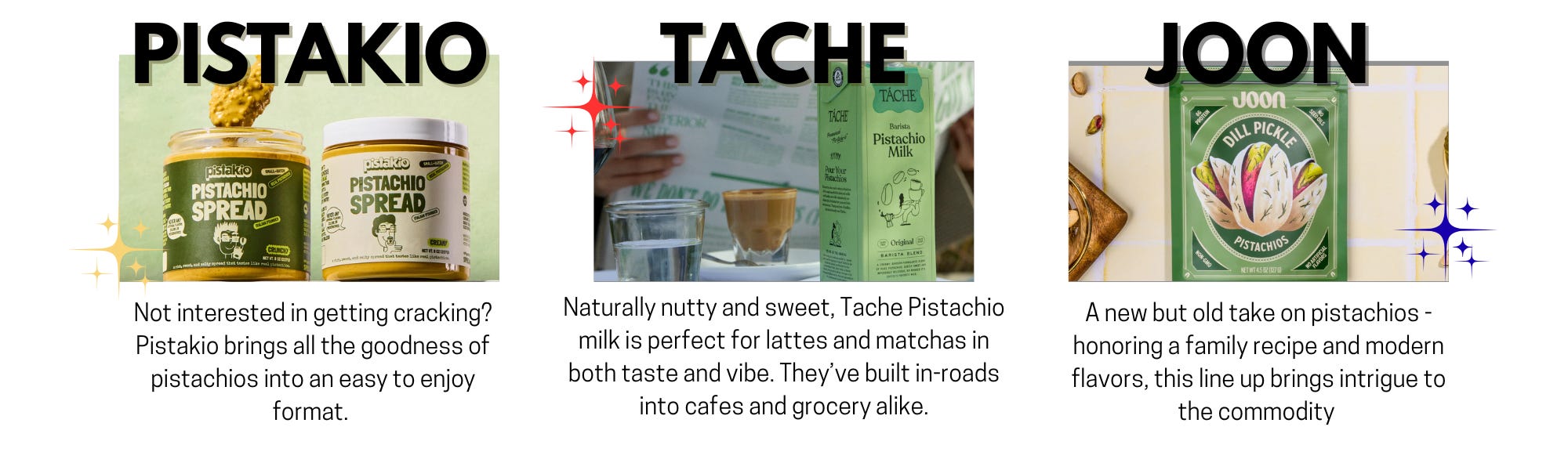
While Wonderful and “Dubai Chocolate” definitely are off to the races, I think there’s more room for a diversified competitive set to come into the mix. For all of my enemies who love a pistachio, here’s a few brands I first stumbled upon via Snaxshot that I’m keeping my eye on:
Why are pistachios winning?
When you put it together, pistachios win on three fronts that actually matter:
They’re distinctive. The color, the texture, the premium halo. They photograph well and they crunch. Distinctive assets build memory.
They’re everywhere. Coffee shops, 7-11, grocery, Shake Shack, my local acai shop. That’s physical availability doing its job.
They’re top-of-mind. Campaigns + virality turned a commodity into a craving. That’s mental availability at work.
Are we at peak pistachio? Probably not. Plantings from the last decade are still maturing, California still dominates U.S. supply in a time where domestic crops are getting extra attention, and the flavor has crossed from product into shorthand. As long as pistachios stay both easy to buy and easy to think of, they’ll keep showing up on menus (and sadly, in my allergy notes).
If you had fun diving deep on the world of pistachios - subscribe so you don’t miss my next obsessive investigation! And if you have a topic you’re super curious about in the food space, drop me a line. I love exploring the why behind trends and the industry.
Sources:
99 percent grown in California! Unbelievable. Now I’m curious how many of the pistachios are sold via Costco (in pure nut or Dubai form!)